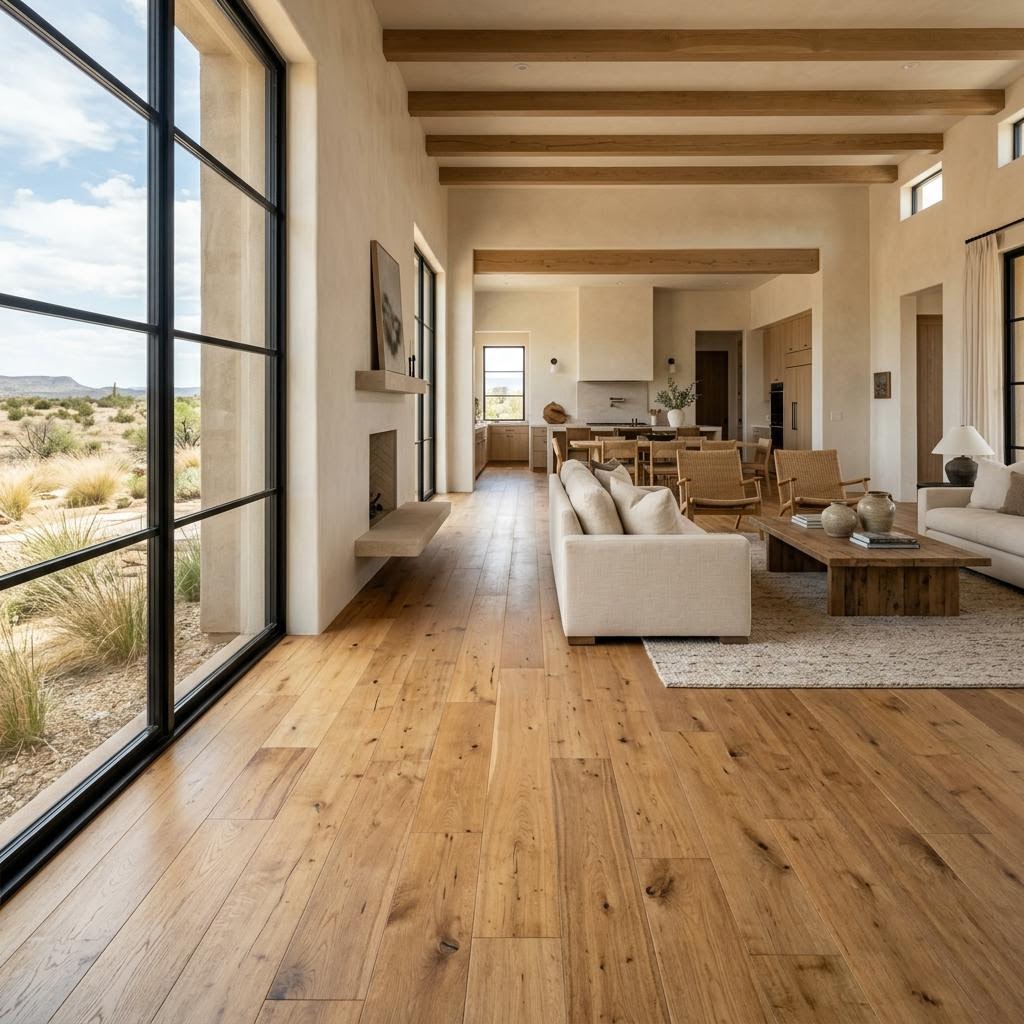
Heated Floors Can Ruin the Wrong Flooring
If you're like many Odessa and Midland homeowners considering in-floor heat, have you wondered whether the flooring you love will actually handle the temperature changes without warping, gapping, or losing its warranty? The wrong choice can turn a comfort upgrade into an expensive tear-out. And in West Texas, where homeowners expect materials to last, discovering too late that a product was never approved for radiant heat can leave you paying twice.
Here's what decades of helping West Texas homeowners has taught us about choosing flooring for heated floors the right way.
Since 1988, Permian Basin homeowners have trusted The Design Gallery because we help them look past samples and style alone to understand how flooring performs in real homes, real conditions, and real installation scenarios.
Not every beautiful floor is built for radiant heat
Radiant heat can be a smart comfort feature, especially in bathrooms, kitchens, and primary suites where tile floors may feel cold underfoot during winter mornings in Odessa or Midland. But the system under the floor is only half the equation. The floor covering above it has to be specifically approved by the manufacturer for radiant applications.
This is where many homeowners get tripped up. They assume that if a floor is durable, waterproof, or premium priced, it must be compatible with in-floor heat. That simply isn't true. Some products perform beautifully over radiant heat, while others can cup, dry out, expand too quickly, or fail at the locking system or adhesive layer.
When clients ask us about radiant heat flooring compatible Odessa TX options, we start with one rule: never choose the floor first and ask about compatibility later. Always confirm the manufacturer's radiant heat guidelines before installation. That includes maximum floor temperature, approved heat system type, moisture requirements, acclimation instructions, and whether the warranty remains valid.
In general, the most reliable categories for radiant heat are:
- Porcelain and ceramic tile because they transfer and hold heat extremely well
- Engineered hardwood when the specific product is approved for radiant heat
- Select luxury vinyl products when the manufacturer clearly permits radiant installations
Solid hardwood is often more limited than homeowners expect. Traditional site-finished or solid plank wood may react too strongly to heat fluctuations, especially if indoor humidity is not controlled. And some luxury vinyl products that look ideal on paper are restricted once radiant heat enters the conversation. If you're still comparing materials, reviewing flooring options for your home with a design professional can save a great deal of frustration later.
Why some LVP and hardwood warranties are voided
One of the most important things West Texas homeowners need to know is this: warranty protection usually depends on following very specific installation conditions. The phrase “radiant heat approved” is not enough by itself. You need to know how it's approved and under what limits.
For example, some luxury vinyl plank flooring products are only approved over embedded hydronic systems, not electric mats. Others require that the temperature never exceed a certain surface level, often around 80 to 85 degrees, though exact limits vary by brand. If the floor gets hotter than the stated threshold, the planks may expand, the wear layer may stress, or the locking system may weaken. In those cases, a flooring failure may not be considered a product defect at all.
Hardwood has its own rules. Some engineered hardwood flooring collections are designed with layered construction that helps reduce movement over radiant heat. But even then, manufacturers often require gradual temperature changes, proper subfloor moisture testing, and stable interior humidity year-round. Skip those steps, and the warranty may be voided. That matters because wood movement problems may not appear immediately. They often show up months later as small gaps, cupping, checking, or finish issues.
Here are common reasons warranties get denied with heated floors:
- The flooring product was never approved for radiant heat
- The installer exceeded the maximum floor temperature
- The system was turned on too quickly before or after installation
- Subfloor moisture levels were not tested and documented
- Indoor humidity was allowed to swing outside manufacturer limits
- The heat source type did not match the product's approval guidelines
That is why asking for paperwork is not being picky; it's being smart. In Odessa, Midland, and across the Permian Basin, homeowners investing in remodeling should expect clear product guidance, not assumptions. If you are searching for radiant heat flooring compatible Odessa TX, the safest path is to review the exact product specifications before anyone orders material.
Best floor types for heated floors in West Texas homes
Every home is different, but some flooring categories consistently make more sense when radiant heat is part of the plan.
1. Tile is usually the safest and most efficient choice
Tile remains the gold standard for radiant heat performance. It conducts heat efficiently, holds warmth well, and is highly stable under temperature changes. In bathrooms especially, tile over radiant heat delivers the comfort many homeowners in West Texas are after. If your goal is performance first, tile is hard to beat.
2. Engineered hardwood can work beautifully when selected carefully
Many homeowners want the warmth and character of wood without giving up heated-floor comfort. In that case, engineered hardwood is usually the better option than solid hardwood. Its layered construction tends to be more dimensionally stable. But approved product selection matters, board width matters, and humidity control matters. This is not a category where “close enough” works.
3. LVP can be a good option, but only with the right product specs
LVP appeals to many Odessa and Midland homeowners because it offers durability, easier maintenance, and a softer feel underfoot than tile. Some products do pair well with radiant systems, especially in busy households. But some do not. Thickness, core construction, backing, and manufacturer heat limits all affect performance. If you're exploring radiant heat flooring compatible Odessa TX products, this is one area where side-by-side brand comparisons are extremely valuable.
4. Carpet and solid hardwood are more limited
Carpet can reduce heat transfer, making the system less efficient, especially with thicker pad combinations. Solid hardwood is often the riskiest natural floor over radiant systems because it expands and contracts more dramatically. That doesn't mean these materials are never used, but they usually require more caution and may not be the best fit for the investment.
What to decide before installation starts
The biggest mistakes with heated floors usually happen before a single board or tile is laid. Homeowners often focus on color and style but miss the technical planning that protects the investment.
Before installation, make sure these questions are answered:
- What type of radiant system is being used? Hydronic and electric systems may have different product approvals.
- What is the maximum surface temperature? The flooring manufacturer should provide a clear limit.
- Has the subfloor been tested? Moisture and flatness still matter, even with radiant heat.
- Will temperatures be ramped gradually? Sudden heating can shock some flooring materials.
- Is indoor humidity being managed? This is especially important for wood products in the dry West Texas climate.
- Who is coordinating the system and flooring specs? Your flooring selection and heating plan should support each other, not conflict.
This coordination is where experienced guidance matters most. A heated-floor project isn't just about finding a floor that looks right in the showroom. It's about choosing one that will still perform well years from now in a real Permian Basin home. That is exactly why so many homeowners ask us for help narrowing down the best radiant heat flooring compatible Odessa TX options before they commit.
Ready to Love Your Home Again?
If you're planning heated floors in Odessa, Midland, or anywhere in West Texas, let's help you choose flooring that looks beautiful and protects your investment. Schedule a FREE in-home design session or visit The Design Gallery showroom to explore trusted options for radiant heat applications. Call (432) 367-0995, stop by 4101 E University Blvd, Odessa TX, or visit tdgtexas.com. Schedule Your Free Design Session →