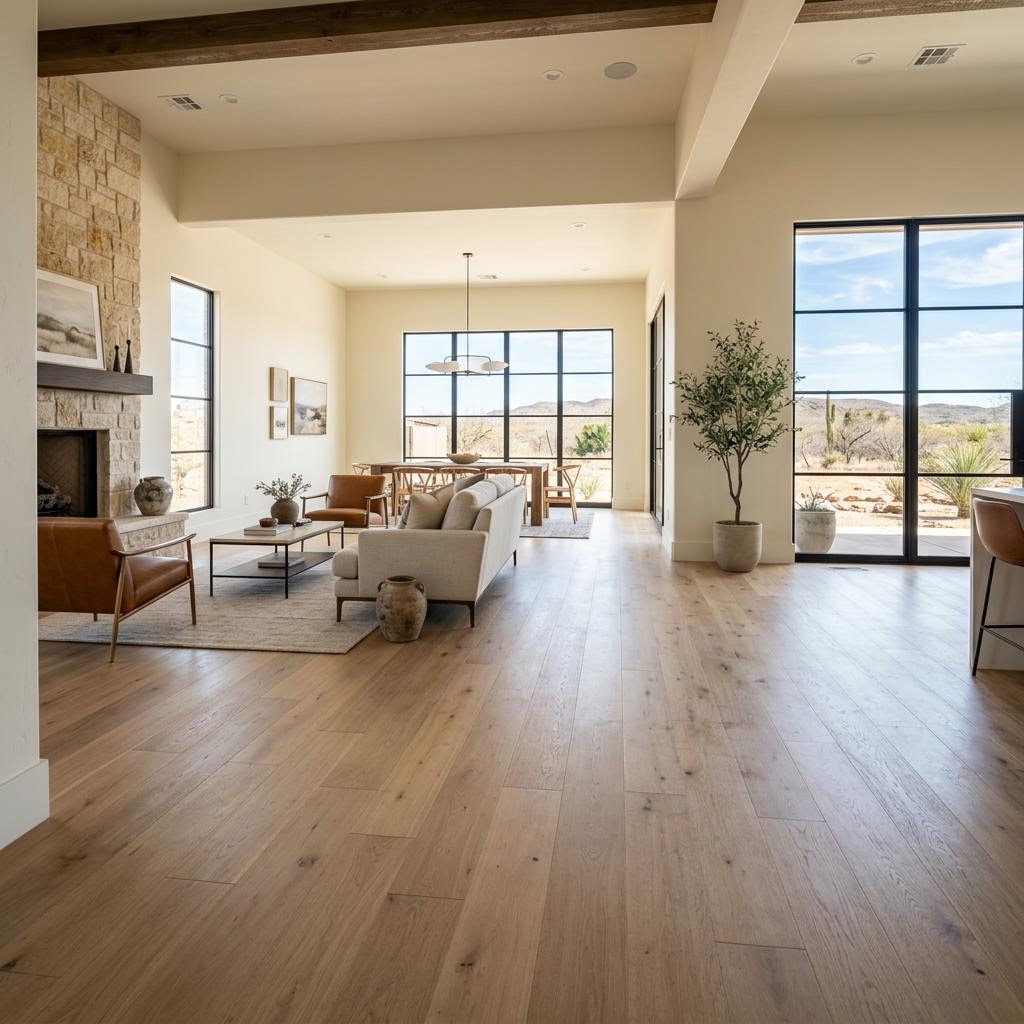
Flooring7 min readJuly 14, 2026Updated November 19, 2026
Sunroom Flooring: Tile, LVP, Heat, and Direct Sunlight
Learn how to choose tile and LVP for sunrooms that withstand intense solar gain and temperature shifts while maintaining a seamless interior design.
Thinking About Updating Your Home?
Whether you're exploring flooring, countertops, kitchens, or bathrooms — our free Design & Planning Session helps you understand your options and create a clear path forward.
A sunroom can expose flooring to stronger sunlight and wider temperature changes than the rest of the house. Before extending an indoor floor into that space, check its heat limits, UV guidance, and approval for the room's conditions.
Sunroom and patio flooring must be selected for environmental factors that differ significantly from standard interior spaces.
Why sunroom flooring fails when standard interior flooring works everywhere else
A sunroom functions as a transitional space. In Odessa, Midland, and across the Permian Basin, direct sun exposure through large windows can create extreme surface temperatures. Combined with UV exposure and rapid temperature shifts, ordinary interior flooring often breaks down faster than expected.
Choosing flooring for a sunroom is a distinct process from selecting materials for a hallway or office. Products that perform well in shaded areas may expand excessively, fade, or develop adhesive failures under intense solar gain. Products labeled as "waterproof" require specific ratings to ensure they can withstand high-heat environments.
Will the space stay climate-controlled year-round?
Do you want the sunroom to visually flow into adjacent rooms or feel distinct?
Those answers shape everything—from whether tile is the safest long-term choice to which luxury vinyl plank options can handle the environment without movement, fading, or premature wear.
Best tile choices for enclosed patios and high-UV sunrooms
For many West Texas sunrooms, tile is the most dependable answer. Porcelain tile in particular handles UV exposure extremely well, resists fading, and stands up to big temperature changes better than many other floor types. It is also an excellent option when a sunroom opens to an exterior door, a pool area, or a patio where dust, grit, and occasional moisture get tracked in.
If durability is the priority, porcelain is a reliable choice. It offers several advantages for sunroom installations:
Color stability: Porcelain does not fade the way some resilient flooring can under direct UV exposure.
Temperature tolerance: It handles heat and seasonal swings with less risk of warping.
Design flexibility: You can choose stone looks, concrete looks, or wood-look tile for a warmer style.
Low maintenance: West Texas dust and debris are easier to clean from tile surfaces.
That said, not all tile installations are equal. The right underlayment, substrate preparation, grout selection, and movement joints matter even more in a sunroom than they might in a standard interior room. A beautiful tile floor can still crack if the installation does not account for structural movement or thermal expansion. That is one reason homeowners throughout Odessa and Midland often benefit from seeing full-size samples and discussing use conditions in person before making a decision.
Wood-look porcelain has become especially popular for enclosed patios because it creates the warmth of hardwood with much better solar performance. If you want a seamless flow from your interior living space into the sunroom, this can be one of the smartest ways to get that look without taking on the risk that comes with real wood in a high-sun environment.
When LVP works well in a sunroom—and when it doesn't
Luxury vinyl plank has earned its popularity for good reason. It is comfortable underfoot, easier on dropped items than tile, and available in highly realistic visuals. In many parts of the home, LVP flooring is an excellent choice. But in a sunroom or enclosed patio, the decision needs more care.
Want To See These Styles In Your Own Home?
Visualize flooring, countertops, and tile in your actual space before you decide. No design experience required.
POWERED BY ROOMVO — COMING SOON
Luxury vinyl plank (LVP) is often chosen for its comfort and realistic visuals. However, sunrooms require careful product selection. Construction quality, core stability, and wear layers are critical. Without the correct specifications, LVP can be vulnerable to expansion, shrinking, and discoloration in high-heat, high-sun areas.
When evaluating LVP for sunroom applications, review the following factors:
Maximum surface temperature ratings
Manufacturer limitations for direct sunlight
Window treatments or UV-control glass recommendations
Expansion gap and installation requirements
Whether a glue-down or floating system is better for the space
In some enclosed patios, especially those with moderated sunlight or strong climate control, LVP can absolutely be a practical and attractive solution. In others, tile will simply offer more peace of mind. The key is not choosing based on trend alone. It is choosing based on how your specific Odessa or Midland sunroom actually behaves during the hottest months of the year.
How to plan the transition into a sunroom
Most homeowners do not just want a floor that survives. They want the sunroom to feel like a natural extension of the home. That means the transition from the kitchen, living area, or hallway into the enclosed patio should feel intentional, not patched together. The good news is that you can create that seamless look in several ways.
One option is to continue the same flooring material from the adjacent interior room into the sunroom—if the material is truly suitable for both spaces. Another is to use a coordinating product with similar tone, plank size, or texture so the eye reads continuity even if the performance needs are different. For example, a wood-look tile in the sunroom can pair beautifully with hardwood and LVP flooring in nearby interior areas. That approach often gives homeowners the visual flow they want while still respecting the harsher conditions in the sunroom.
To make the transition feel clean and elevated, we often recommend focusing on:
Color temperature: Keep warm or cool undertones consistent from one space to the next.
Scale: Match plank widths or tile proportions as closely as possible.
Threshold design: Use minimal, intentional transitions instead of abrupt material breaks.
Finish and texture: Slightly textured surfaces can bridge indoor comfort and practical durability.
This is where showroom guidance makes a real difference. Side-by-side comparisons help you see what photographs cannot—how materials reflect light, how undertones shift through the day, and which combinations make a sunroom feel connected to the rest of your home rather than added on as an afterthought.
Why installation details matter as much as the material itself
Even the best material can underperform if the installation is handled like a standard interior room. Sunroom and enclosed patio floors often need special attention to slab conditions, moisture testing, expansion planning, and product-specific requirements. In West Texas, where heat and sun are relentless, skipping those details can shorten the life of the floor significantly.
That is another reason the phrase choosing sunroom flooring should lead homeowners toward a performance-first mindset. The right floor is not just about what is on top. It is also about what is underneath, how it is installed, and whether the full system is designed for the space.
At The Design Gallery, we help homeowners think through the complete picture: how the room is used, how much sun it gets, what style they want, and what product will still look good years from now. That practical planning is often what separates a remodel you enjoy from one you keep troubleshooting.
Ready to Love Your Home Again?
If you are updating a sunroom or enclosed patio in West Texas, choose materials that balance aesthetics with heat and UV resistance. Schedule a design consultation or visit our showroom to explore appropriate tile and LVP options. Schedule your design session or contact us for more information.
Considering New Flooring?
The right floor sets the tone for your entire home. Our team helps you compare materials, styles, and finishes to find what works best for your space and lifestyle in Odessa or Midland.
Why West Texas Homeowners Trust The Design Gallery
For more than 35 years, homeowners throughout Odessa, Midland, Andrews, Big Spring, Greenwood, Gardendale, Monahans, Seminole, Stanton, and surrounding communities have trusted The Design Gallery by Paul Evans for flooring, countertops, kitchen remodeling, bathroom remodeling, and cabinetry.