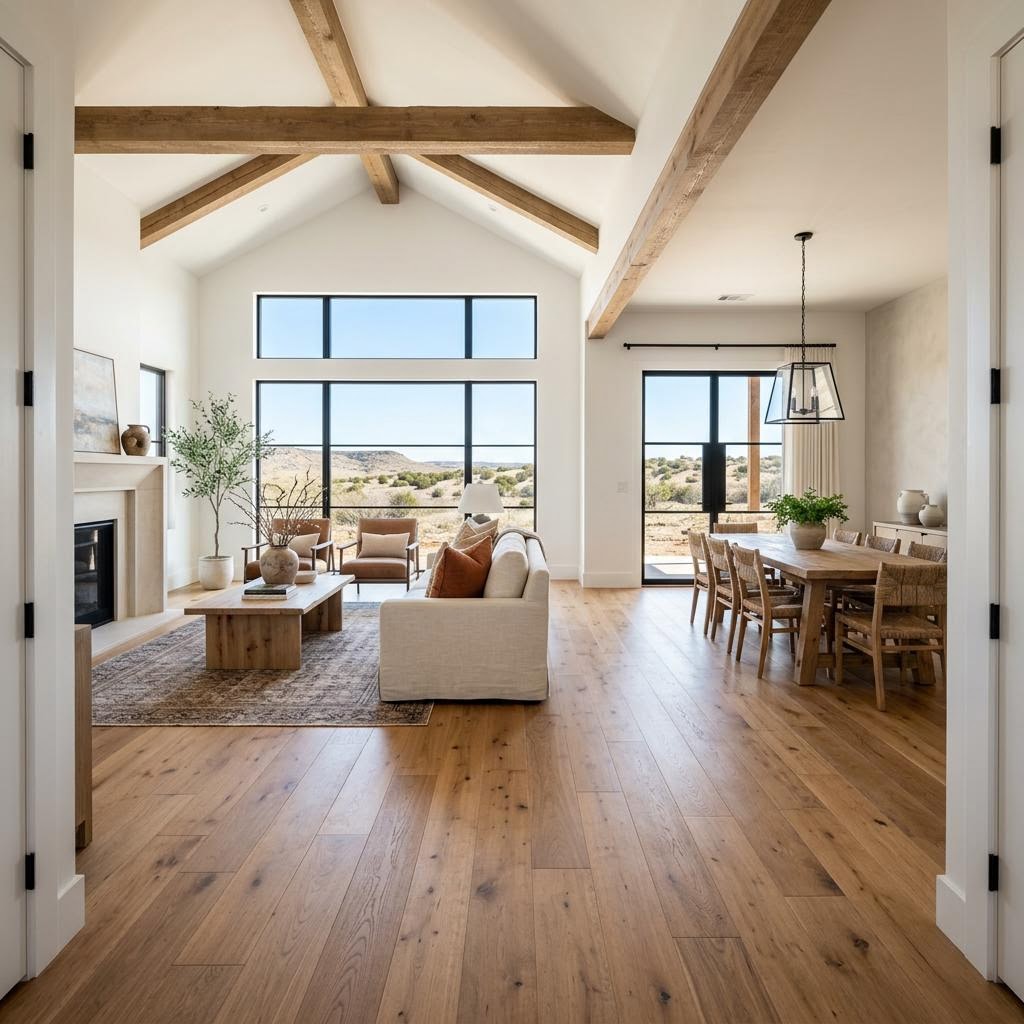
Which flooring decisions are easiest to make before you move in? Compare the builder's included products, upgrade costs, and installation details before deciding whether to accept the standard floor or replace it later.
Making flooring decisions before the home is finished allows for a wider range of options and significantly lower change costs.
The Design Gallery helps homeowners evaluate builder allowances, product performance, and long-term value before locking in choices that are expensive to undo.
Why flooring choices during the build phase usually save money
A common mistake is treating flooring as a finishing touch rather than a structural budget decision. During construction, homes are accessible and empty, allowing installers to work efficiently without needing to protect furniture or coordinate around daily life. This efficiency can reduce labor costs significantly.
Accepting a standard floor to maintain the construction timeline often leads to unnecessary waste. Replacing that flooring shortly after closing creates landfill waste and adds the expense of a second renovation project just as you are trying to settle in.
Making your selections early also lets you think more clearly about room-to-room transitions, baseboards, stair details, and how your flooring works with cabinets, paint, and lighting. That is especially important if you’re comparing hardwood and LVP flooring or trying to decide where soft surfaces still make sense. When flooring is addressed before installation schedules are locked, you have more leverage to create a finished home that feels intentional from day one.
For many families in the Permian Basin, the right choice is not the most expensive choice. It is the one that fits how you actually live, how much West Texas dust and traffic your floors will handle, and whether you want to revisit the decision in five years or forget about it for the next twenty.
What builders typically offer—and where upgrades matter most
Most production and semi-custom builders in Odessa and Midland offer flooring through a tiered allowance system. You’ll usually see a standard package, then a series of upgrade levels with different price points. That can be helpful, but it can also make it hard to tell whether you’re comparing true quality improvements or simply paying more for a different look.
Builder packages often focus on keeping initial costs predictable. That means standard options may include basic carpet weights, limited wood visuals, fewer plank dimensions, or products selected because they are easy to source and install at scale. There’s nothing inherently wrong with that—but it may not align with the way your household uses the home.
Here’s where outside guidance becomes valuable. At The Design Gallery, we help homeowners evaluate what the builder is actually providing and where an upgrade changes daily life the most. For example:
- Main living areas: This is where visual impact and long-term wear matter most. A better-quality luxury vinyl plank option or upgraded hardwood can improve durability, comfort, and the overall feel of the home.
- Bedrooms: Builder carpet may be acceptable in secondary rooms, but if softness, stain resistance, or longevity matter, comparing carpet styles and performance before installation can save frustration later.
- Entries, kitchens, and hallways: These high-traffic zones need products that can handle dirt, grit, and frequent cleaning—something every West Texas homeowner understands well.
- Whole-home continuity: Builders may offer fragmented options that look fine on a sample board but feel disconnected once installed. Seeing the full palette together helps avoid that patchwork effect.
The primary concern is often determining which upgrades provide the most value based on the floorplan, family needs, and priorities like maintenance, comfort, or resale potential.
The key is not upgrading everything blindly. It’s upgrading the areas that are hardest to replace and the surfaces you interact with every single day.
The flooring decisions that are hardest to change after move-in
Some flooring choices are relatively simple to revisit later. Others become disruptive, expensive, and emotionally draining once you’ve unpacked. If you want to avoid regret, these are the decisions to slow down and get right before closing.
1. Continuous flooring through main living spaces. Open floorplans are common in Odessa and Midland homes, which means one flooring decision often affects the entry, living room, kitchen, dining area, and hallways all at once. Replacing that later can involve moving nearly every piece of furniture in the home and potentially disrupting baseboards, trim, and transitions.
2. Stair flooring and trim details. Stairs are among the most labor-intensive areas to redo. If your home includes stairs, the material, nosing profile, and finish details should be chosen carefully during the build phase.
3. Flooring under cabinets, islands, and built-ins. Depending on the construction sequence, changing flooring later may require working around fixed elements or accepting visible transitions where you never wanted them. That’s one reason early coordination matters.
4. Color tone and undertone. Homeowners often focus on whether they like “light” or “dark” floors, but undertones matter just as much. In West Texas light, some grays read blue, some browns read orange, and some neutrals clash with cabinetry in ways that aren’t obvious from a tiny sample. It is far easier to solve that before installation than after.
5. Surface performance in high-dust environments. Certain textures, finishes, and colors are far less forgiving than others. In the Permian Basin, where wind, dust, and heavy traffic are realities, floor performance is not theoretical. It shows up in your cleaning routine almost immediately.
When evaluating builder allowances, consider whether a change later would require major demolition or a second, larger investment. If the answer is yes, that area deserves attention before the build is finalized.
That is why many homeowners explore engineered and solid hardwood options or compare upgraded resilient products before the builder order is finalized. The earlier the decision, the more control you have over cost, logistics, and design consistency.
How to choose the right floor for your lifestyle, not just the sample board
A flooring sample in a builder design center can be deceiving. It doesn’t show how the product feels across an entire room, how it handles the afternoon sun, or how it performs with kids, pets, guests, and West Texas dust. A better decision starts with better questions:
- How much traffic will this area get? Main pathways deserve more durability than low-use spaces.
- How much maintenance do you realistically want? The right answer is the one you can live with consistently, not the one that sounds ideal in theory.
- Do you want softness, warmth, or water resistance? Different rooms call for different priorities.
- How long do you plan to stay in the home? Your timeline can shape whether you optimize for immediate budget, long-term durability, or resale appeal.
- What will these floors look like with your actual finishes? Cabinets, countertops, wall color, and lighting all affect the final result.
That’s where a showroom experience can be so helpful. Instead of selecting from a narrow builder board, you can compare broader options side by side, ask practical performance questions, and create a plan that fits your home as a whole. For homeowners in Odessa, Midland, and across the Permian Basin, that often brings confidence to a process that otherwise feels rushed.
Ready to Love Your Home Again?
Avoid the compromise of settling for builder-grade materials by planning your flooring before closing. Proper guidance now saves money and ensures the home meets your expectations from the start. Schedule a design consultation or contact our showroom to discuss your project.