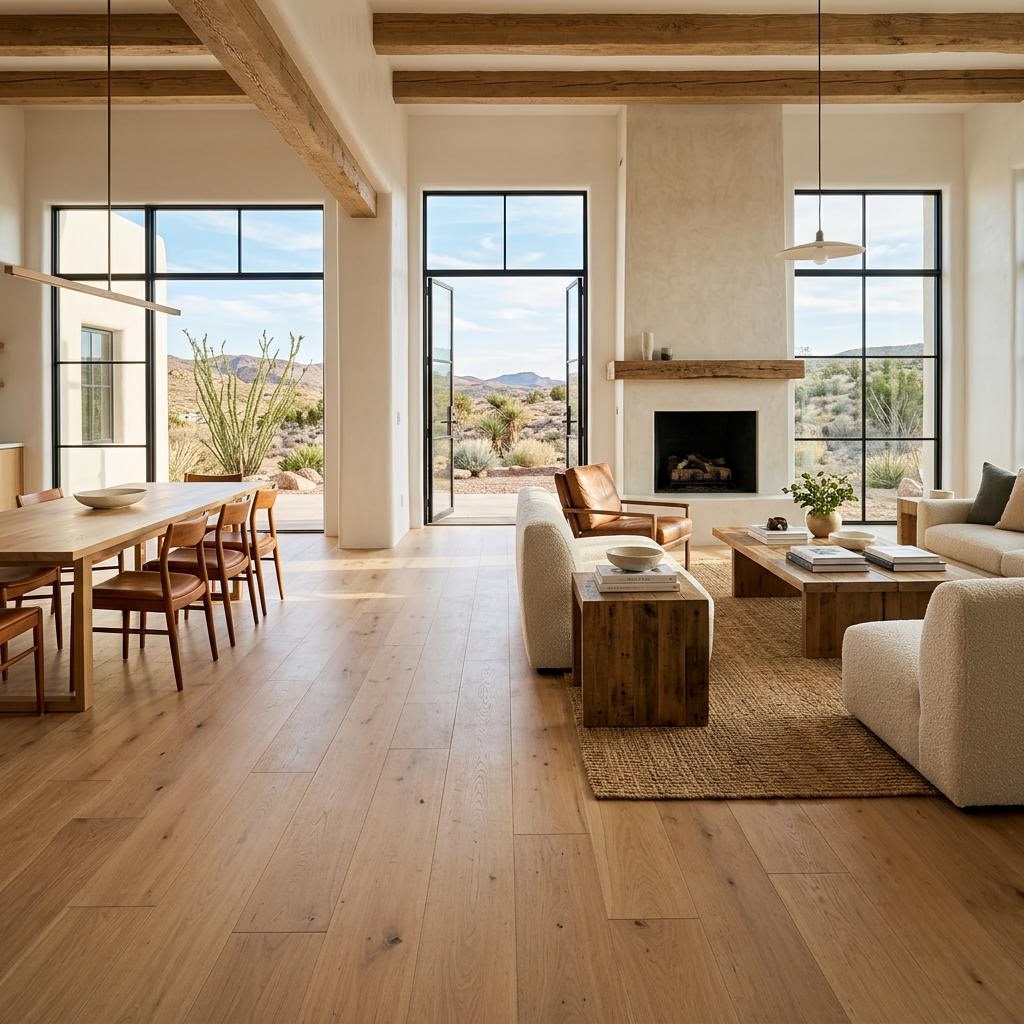
A room can feel more current without choosing the most noticeable floor on display. Larger formats, restrained patterns, and lower-sheen finishes offer several directions; the best fit depends on the room's proportions and existing surfaces.
The right flooring does more than replace a surface—it anchors the design and simplifies the visual experience of your home.
The Design Gallery helps homeowners evaluate and coordinate flooring options that suit their specific interior lighting and personal style.
Why modern flooring feels better before you can even explain why
Contemporary flooring styles prioritize a calm, open, and intentional aesthetic. In open-concept layouts where living rooms flow into kitchens, the chosen flooring material significantly influences whether the space feels cohesive or cluttered.
For a less busy floor, compare quieter patterns, lower-sheen finishes, and longer visual repeats. Instead, homeowners are choosing larger surfaces, softer finishes, and fewer interruptions across the floor plane. That means materials that let the eye travel naturally from one end of the room to the other.
In practical terms, modern contemporary flooring often includes:
- Large-format tile with fewer grout lines and a more seamless appearance
- Matte-finish luxury vinyl plank in subtle natural tones
- Minimal-joint hardwood flooring with wider planks and low-sheen finishes
That cleaner look matters in West Texas homes because sunlight is strong, dust is real, and rooms need finishes that hold up visually throughout the day. Glossy floors can reflect too much light and call attention to every footprint. Busy grout joints can make a room feel smaller. Narrow planks or high-variation patterns can create visual noise where you actually want rest.
The goal is not to make your home look cold or trendy. The goal is to make it feel grounded, current, and easy to live in.
Large-format tile for clean lines in kitchens and main living areas
For many, large-format tile is an effective choice for a streamlined, architectural look. In kitchens and entryways, larger tiles minimize the number of grout joints, creating a more expansive and seamless floor plane.
Warm greige, limestone looks, concrete visuals, and restrained stone patterns offer several ways to keep a tiled room visually simple. These are not the shiny, high-contrast tiles of years past. The more current direction is matte or low-luster, with gentle movement that supports the room rather than dominating it.
Large-format tile works especially well when you want to:
- Visually enlarge a kitchen or living room
- Create a smooth transition across open spaces
- Reduce the grid-like look of frequent grout lines
- Support a modern cabinetry or minimalist design scheme
That said, scale matters. The best tile for a Midland or Odessa home is not just about what is popular. It depends on room size, subfloor condition, cabinet style, wall color, and even how natural and artificial light interact in the space. A tile that looks sleek in a showroom can feel flat in the wrong room, while the right one can make everyday spaces feel custom designed.
This is why many homeowners begin by exploring complete flooring options instead of trying to choose from a sample board in isolation. When you compare textures, undertones, and grout decisions side by side, you start to understand what gives a room that polished, modern finish without sacrificing warmth.
Matte-finish LVP gives you a modern look without the plastic shine
Luxury vinyl plank (LVP) has matured, with current matte-finish collections offering a refined, natural look. These materials provide high durability while avoiding the artificial shine or distracting pattern repeats common in older synthetic flooring.
For Odessa and Midland households with kids, pets, frequent guests, or busy kitchens, matte LVP offers a strong balance of style and practicality. The lower sheen helps disguise dust and everyday traffic better than glossier floors, which is a major advantage in West Texas. It also photographs and lives better in bright spaces, where too much reflection can make a room feel harsher than intended.
What makes modern matte LVP feel contemporary?
- Wider planks with cleaner proportions
- Soft, natural oak-inspired visuals
- Lower contrast grain patterns
- Muted taupe, warm beige, and light brown undertones
- Minimal bevels for a less segmented look
When selected well, matte-finish LVP flooring can create the same calm visual flow people love in more expensive materials. It is especially effective when homeowners want one continuous floor through living rooms, kitchens, hallways, and breakfast areas.
The key is avoiding anything too gray, too glossy, or too distressed. Those choices can age quickly or fight with the rest of the home. The strongest modern looks tend to be quiet, natural, and restrained. That is what gives them staying power.
If your existing floor feels overly rustic or difficult to coordinate, updated matte LVP collections are a practical alternative. They offer an elevated appearance capable of handling the demands of high-traffic households.
Minimal-joint hardwood creates warmth without visual clutter
Hardwood remains a classic choice for warmth, but modern preferences lean toward specific details to achieve a contemporary feel: wider planks, cleaner grading, lower-sheen finishes, and layouts designed to minimize visual breaks.
In a modern setting, hardwood should not feel overly orange, glossy, or heavily hand-scraped. Those finishes can make a space feel dated fast. The better direction for modern residential flooring trends homes is hardwood that feels tailored and natural—something that lets cabinetry, furnishings, and architecture stand out.
Minimal-joint hardwood works because it reduces visual stops. Fewer abrupt transitions and more continuous plank flow help the room feel larger and calmer. In open-concept homes across Midland and Odessa, that can make a dramatic difference.
Today, many homeowners are drawn to:
- Wider plank white oak looks
- Soft matte or satin finishes
- Neutral brown and beige undertones
- Cleaner grain selections with less dramatic variation
When you browse modern hardwood flooring choices, think beyond the sample itself. Ask how it will connect your living room to your kitchen. Ask whether the finish will highlight every speck of dust in West Texas conditions. Ask whether the color will still feel balanced against your countertops, walls, and cabinetry five years from now.
That is the difference between choosing a floor you merely like and choosing one that helps you love your home again.
How to choose a modern floor for your home
Choosing between tile, LVP, and hardwood depends on your priorities regarding aesthetics and daily function.
- If you want the cleanest, most architectural look: large-format tile is often the strongest fit, especially for kitchens and expansive main areas.
- If you want durability and easier maintenance: matte LVP is often ideal for active households that still want an elevated aesthetic.
- If you want warmth and long-term classic value: minimal-joint hardwood brings a refined, high-end feel that works beautifully in living areas.
Most importantly, do not choose flooring from a tiny sample alone. Bring your cabinet door, paint swatch, countertop sample, or photos of your rooms. In the showroom, it becomes much easier to compare scale, sheen, undertone, and texture under better guidance.
That educational process is what saves homeowners in Odessa, Midland, and across the Permian Basin from expensive mismatches. A floor should not just look good by itself. It should make the entire home feel more complete.
Ready to Love Your Home Again?
If you would like to explore large-format tile, matte LVP, or minimal-joint hardwood for your home, please schedule a design session or visit our showroom to compare materials in person. For questions, please reach out via our contact page.