
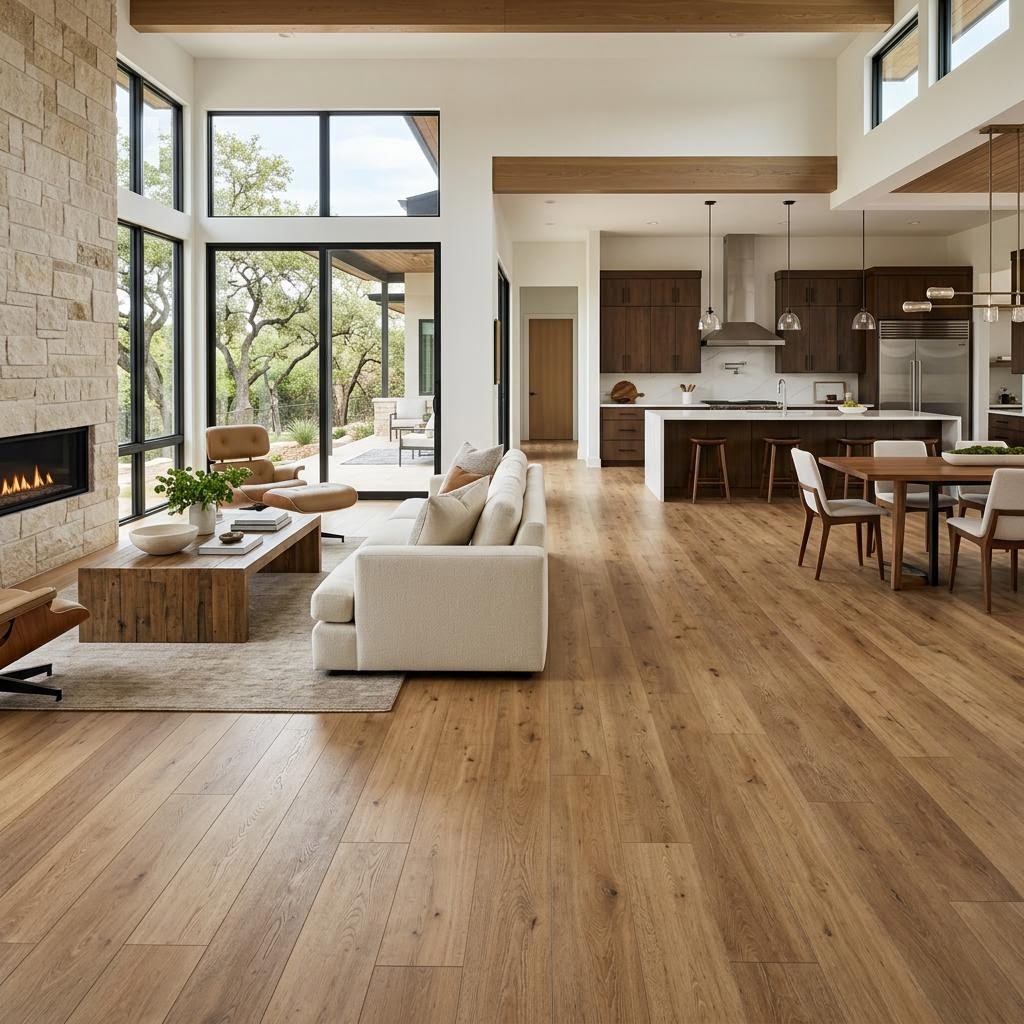
Thinking About DIY LVP? Read This First
If you're like most Odessa homeowners considering floating LVP installation DIY Odessa TX, you're probably hoping for a floor that looks great, goes in fast, and doesn't turn into a costly mistake a month later. The problem is that even "DIY-friendly" flooring can fail when the subfloor is uneven, the wrong underlayment is used, or expansion gaps are missed. And in West Texas homes, where heat, dust, and shifting slabs are real factors, small installation errors can become visible gaps, lifted edges, or noisy floors much sooner than most people expect.
Here's what decades of helping West Texas homeowners has taught us: the best DIY flooring projects start with understanding exactly how the product works before a single plank is laid.
Since 1988, Permian Basin homeowners have trusted The Design Gallery because we help them choose flooring that fits real life in Odessa and Midland—not just what looks good on a sample board, but what performs well with local conditions, family traffic, pets, and the way the home is actually built.
How floating click-lock LVP actually works
Floating luxury vinyl plank is popular for a reason. Unlike glue-down flooring, floating LVP isn't permanently adhered to the subfloor. Each plank connects to the next through a click-lock system, creating a single "floating" surface that rests above the floor below. That means installation can be faster, cleaner, and more forgiving than some traditional flooring methods—especially for homeowners exploring floating LVP installation DIY Odessa TX as a weekend project.
But "forgiving" doesn't mean foolproof. A floating floor still depends on a stable, flat base. The locking mechanism is designed to keep planks tight and aligned, but if the subfloor dips, humps, or flexes too much, those joints take the stress. Over time, that can lead to separation, movement, or broken locking tabs.
What Odessa and Midland homeowners love most is that today's luxury vinyl plank flooring gives them the wood-look style they want with easier maintenance than natural hardwood. It's comfortable underfoot, handles everyday messes well, and works beautifully in busy households. For many homes in the Permian Basin, it's one of the smartest ways to get a fresh, updated look without choosing a flooring material that demands constant upkeep.
Still, the click-lock system only performs as well as the prep behind it. That's why professionals spend so much time checking moisture, flatness, transitions, and layout before installation even begins.
Why Odessa homeowners love floating LVP for everyday life
There are a few reasons floating LVP continues to be one of the most requested flooring options in Odessa, Midland, and across West Texas.
- It looks elevated without feeling fragile. Homeowners can get the warm appearance of wood with a surface built for active living.
- It handles busy homes well. Kids, pets, guests, and daily traffic are easier on LVP than on many traditional materials.
- Installation can be less disruptive. A floating system often means less mess and faster turnaround compared to more labor-intensive flooring methods.
- It works in many design styles. Whether your home leans classic, transitional, rustic, or modern, there are plank colors and textures that fit naturally.
For homeowners who want a practical remodel decision they can feel good about for years, floating LVP checks a lot of boxes. It's especially appealing when an older floor is making the home feel dated, hard to clean, or visually chopped up from room to room.
That said, product selection matters just as much as installation quality. Wear layer, core construction, plank size, attached pad, and overall thickness all affect how the floor will perform. This is where many DIY shoppers run into trouble: two products can look nearly identical online, yet one is far better suited for a real West Texas household than the other. Seeing samples in person and comparing true quality makes a difference—especially if you're choosing between different flooring styles for your home.