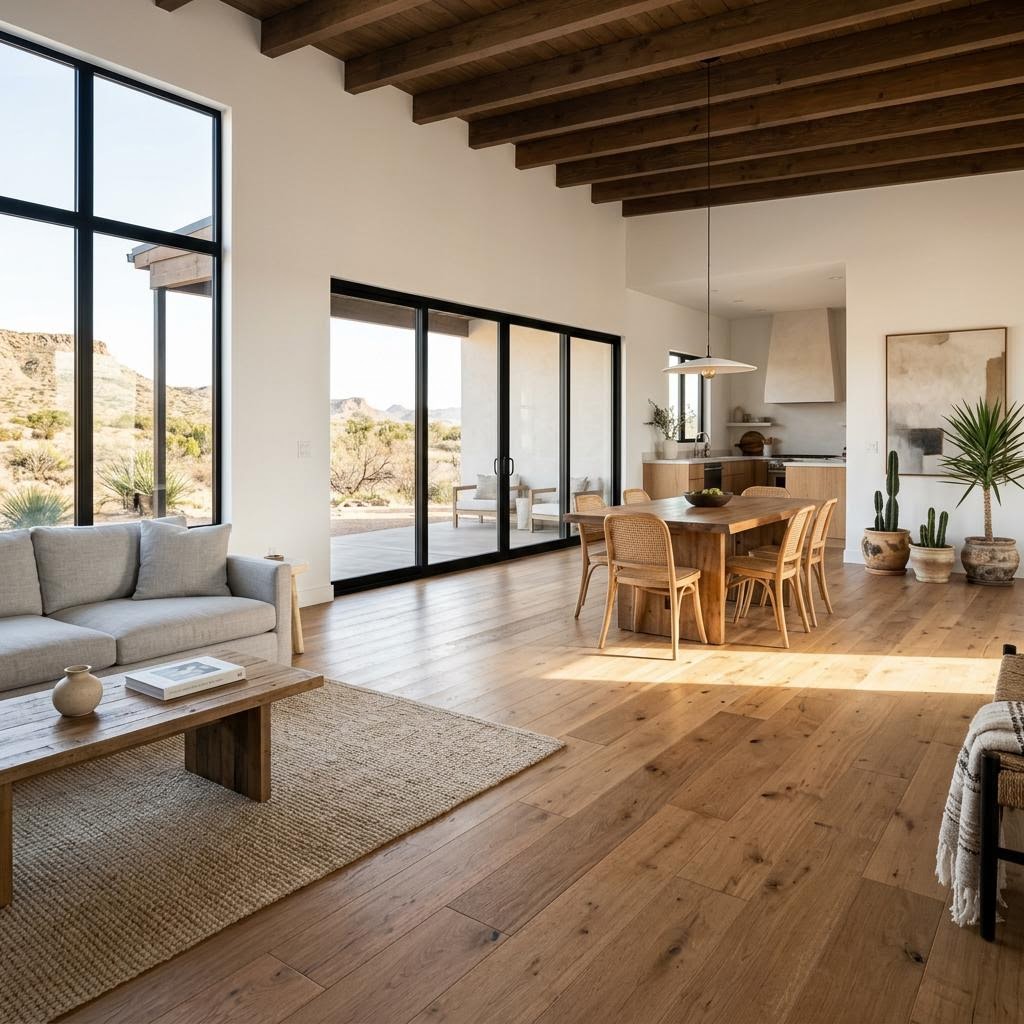
A flooring schedule needs to allow for more than laying the new material. Removal, subfloor repairs, moisture checks, acclimation, and curing can all affect when the room is ready to use again.
Flooring projects are more predictable when you understand the typical schedule, potential variables, and how to prepare for installation.
What a flooring installation timeline usually looks like
The installation timeline depends on the chosen material, the condition of the subfloor or slab, room dimensions, furniture moving, pattern complexity, and the necessary prep work.
Still, there is a practical range most homeowners in Odessa, Midland, and the Permian Basin can expect:
- Carpet: often 1 day for average-sized areas, sometimes 2 if there are multiple rooms, stairs, or furniture coordination.
- LVP: usually 1–3 days depending on square footage, layout, transitions, and floor prep.
- Hardwood: typically 3–7+ days, and longer if site-finished wood, acclimation, sanding, or stain is involved.
- Tile: often 3–6+ days because layout, mortar cure time, grout, and detailed cuts add time.
A basic day-by-day process often looks like this:
- Day 1: Prep and demolition. Existing flooring is removed if needed, furniture is addressed, baseboards or trim may be carefully removed, and the crew evaluates the surface underneath.
- Day 2: Subfloor or slab preparation. This is where many timelines are won or lost. Leveling, patching, moisture testing, crack isolation, or cleanup may be necessary before new flooring goes down.
- Day 3 and beyond: Installation. Material is installed room by room, with cuts, transitions, and details completed as the project moves forward.
- Final day: Finish work and walkthrough. Trim is reinstalled or replaced, the site is cleaned, and final punch-list items are addressed.
For some homes, the process moves quickly. For others, particularly older structures or those with slab movement, the prep phase requires more attention. While it is helpful to estimate a general timeline, it is equally important to identify factors that might specifically impact your home.
If you're still deciding on the right material, it helps to compare how different products perform over time, especially with hardwood and LVP flooring options that fit many West Texas lifestyles.
How long LVP, hardwood, tile, and carpet really take
Each flooring type has its own rhythm. The material itself matters, but so does the installation method.
LVP installation
Luxury vinyl plank is often one of the faster options for busy households in Odessa and Midland. In many cases, installation takes 1–3 days. If the slab is in good condition and rooms are straightforward, a project may move quickly. If floor leveling, moisture concerns, or extensive transition work are needed, the timeline can stretch.
LVP is popular because it offers durability, easier maintenance, and efficient installation. It is especially appealing for families who want an updated look without the extended downtime of some other materials.
Hardwood installation
Hardwood usually takes longer. Engineered wood may install faster than site-finished solid hardwood, but acclimation time and subfloor readiness still matter. A typical project may take 3–7 days or more. If sanding and finishing happen on site, add more time for stain selection, drying, and curing.
Hardwood is beautiful, but it rewards patience. Rushing a wood floor project can lead to expansion issues, finish problems, or long-term performance concerns. For homeowners exploring wood flooring for Odessa homes, realistic expectations upfront are important.
Tile installation
Tile often surprises homeowners because the visible installation may seem straightforward, but the process is detail-heavy. Most tile jobs take 3–6 days or more. Surface prep, dry layout, mortar setting, cure time, grout, and cleanup all take time. Larger-format tile, custom patterns, shower transitions, or uneven slab conditions can add days.
Tile is one of the most durable choices for West Texas homes, but it is rarely the fastest. Precision matters too much.
Carpet installation
Carpet is commonly the quickest option. Many projects are completed in a single day, especially in bedrooms or defined living spaces. However, if there is furniture moving, old carpet removal, tack strip replacement, or subfloor repair, that may add time.
For homeowners who want a softer, faster-refresh option, carpet can be a practical solution. If comfort is high on your list, you may want to browse carpet flooring choices that fit both family use and style goals.
Why West Texas weather and slab conditions can change the schedule
This is where local experience matters. In Odessa, Midland, and across the Permian Basin, flooring timelines are not just about square footage. West Texas conditions can directly affect how quickly a project can move and how carefully it should be handled.
Temperature swings: Big changes between hot days and cooler nights can affect material acclimation, especially for wood products and adhesives.
Dry climate: West Texas air can influence moisture balance in certain materials. Even when the weather feels dry, proper testing and acclimation still matter.
Slab movement and cracking: Many homes in Odessa and Midland are built on concrete slabs. If there are cracks, uneven areas, or movement, those conditions may need correction before installation.
Moisture concerns: Even in a dry climate, slab moisture can still be present. Installing over an untested slab is one of the fastest ways to create a future flooring problem.
Local conditions are a primary reason that project estimates vary. The most accurate timeline is one that accounts for the specific requirements of your home and chosen materials.
When floor prep is skipped, problems often show up later as hollow spots, cracked grout, adhesive failure, uneven planks, or premature wear. That is why an experienced team looks below the surface before promising a finish date.
How The Design Gallery manages the process to reduce surprises
A flooring project feels smoother when the schedule is managed proactively instead of reactively. At The Design Gallery, we believe good communication is just as important as good installation.
That means we guide homeowners through the process before work begins:
- Material selection based on your lifestyle and home conditions, not just appearance.
- Accurate measuring and planning so transitions, patterns, and quantities are accounted for upfront.
- Clear expectations about prep work, especially for slab issues common in West Texas homes.
- Scheduling coordination that considers occupancy, furniture, pets, and daily life.
- Walkthroughs and communication so you understand what is happening and what comes next.
This is especially helpful when a project involves more than one surface or room type. For example, if you're combining new floors with broader updates, it can make sense to coordinate with other interior improvements such as whole-home flooring updates so the sequence is handled efficiently.
In practical terms, good project management means fewer avoidable delays. It also means if something unexpected is uncovered—like slab leveling needs or moisture concerns—you hear about it early, along with the best path forward.
Before work begins, confirm the daily work hours, contact person, access arrangements, and cleanup responsibilities with your installer.
Ready to Love Your Home Again?
If you are planning a project, the best next step is to discuss your specific needs with a professional. Explore flooring options, talk through timing, and create a plan tailored to your home. Schedule your consultation here or contact our team for guidance.