
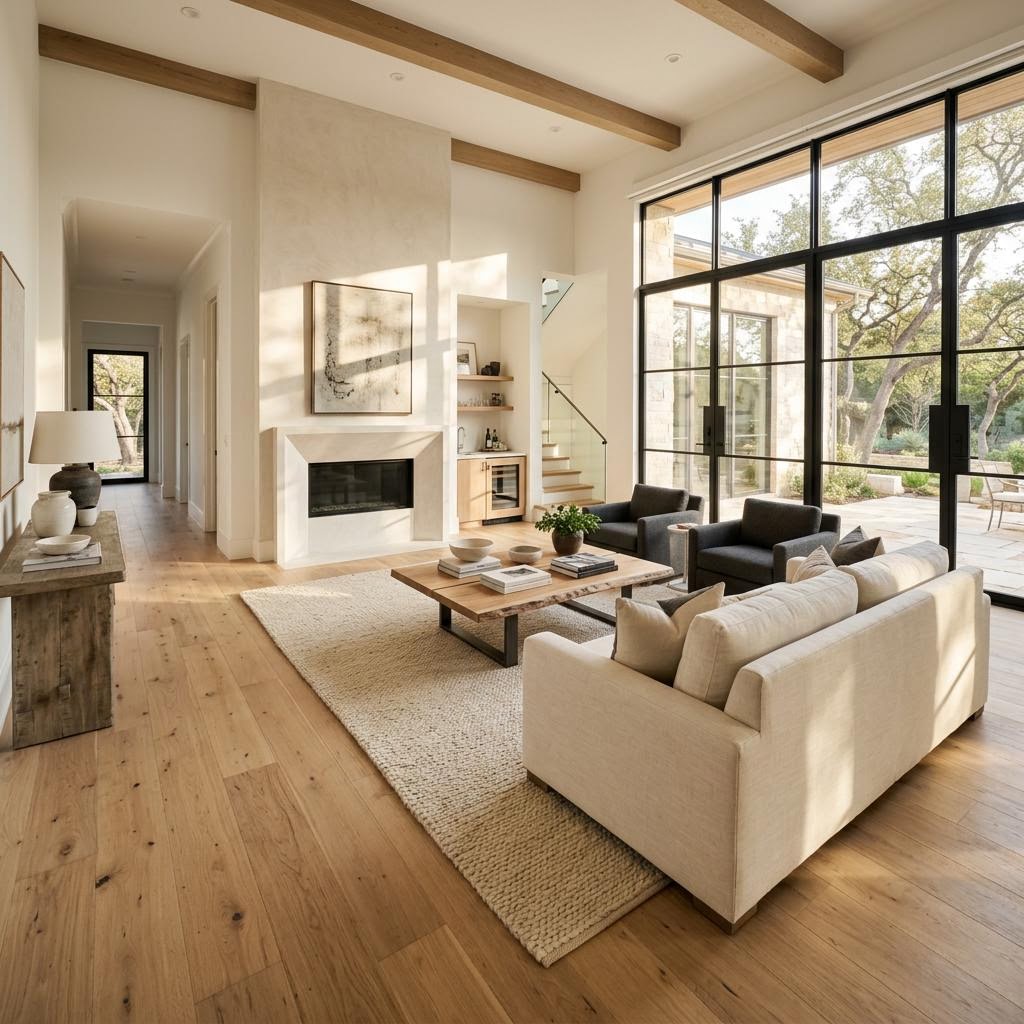
A Janka rating measures one aspect of wood hardness; it does not predict every scratch, dent, or finish mark. Use it alongside the wood species, finish, construction, and traffic you expect in the room.
Understanding wood hardness before purchasing allows for a more informed decision, ensuring the material chosen aligns with daily living conditions.
What the Janka hardness scale actually measures
The first thing to know is that the Janka hardness scale is not a marketing term. It's a wood-industry test that measures how much force it takes to embed a steel ball halfway into a wood species. In simple terms, it gives you a useful way to compare how resistant one type of hardwood is to dents and surface wear compared to another.
This is relevant for active homes handling moving chairs, outdoor footwear, pets, and substantial furniture. Determining which species withstand daily activity best helps identify the right fit for your lifestyle.
Here is the practical part. A higher Janka rating usually means better dent resistance. For example, softer domestic woods like pine are more vulnerable to impressions and wear, while harder species such as hickory or maple generally perform better in busy households. That does not mean softer woods are always a bad choice, but it does mean you should go in with realistic expectations.
When comparing options like hardwood and LVP flooring, the hardness rating acts as a practical filter early in the selection process to narrow down choices based on household requirements.
Why hardness matters in Odessa and Midland homes
Not every home puts the same demands on a floor. A formal dining room used a few times a year is very different from an open-concept living area where kids, guests, and pets move through all day. In Odessa, Midland, and across the Permian Basin, we often see homeowners wanting one floor that can do both: look elevated enough for entertaining and still tolerate real life.
That is exactly where hardness becomes important. The Janka scale does not tell you everything, but it does tell you how likely a wood species is to resist dents from common pressure points such as:
- Dining chairs sliding in and out
- Refrigerators or heavy furniture being moved
- Dog nails hitting the same traffic paths
- Kids dropping backpacks, toys, or sports gear
- High heels and boots concentrated in entry areas
Heavy furniture deserves attention regardless of the wood's hardness rating. Use suitable protectors and follow the manufacturer's moving guidance for pianos, large tables, and other concentrated loads.
Still, it's important not to oversimplify. Hardness is about dent resistance, not total scratch-proof performance. Finish quality, board construction, color tone, texture, and maintenance habits all play a role too. That's why choosing the right hardwood flooring is never just about picking the highest number on a chart.
The best way to use Janka ratings when choosing hardwood
The smartest approach is to use the Janka hardness scale as one part of a bigger decision. Think of it as a screening tool, not the only rule. Here is a simple way Odessa and Midland homeowners can evaluate their options:
- Start with your traffic level. If your home has kids, pets, frequent visitors, or heavy daily use, look at medium-to-higher hardness species first.
- Consider your furniture and layout. Open living rooms, kitchen connections, and large anchored furniture increase the need for dent resistance.
- Think about visual forgiveness. Wire-brushed finishes, matte sheens, and more natural grain variation can hide minor wear better than smooth, glossy finishes.
- Balance hardness with design goals. Sometimes the right floor is not the absolute hardest wood. It's the one that gives you durability, beauty, and a style that fits your home.
For many Permian Basin families, species in the moderate-to-higher Janka range are often the sweet spot. Hickory is a common favorite because it combines strong hardness with distinctive character. White oak is also popular because it offers a timeless look, good overall performance, and works well in a wide range of interiors.