Flooring5 min readJuly 14, 2026Updated November 19, 2026
Flooring for Traditional Homes: Wood, Tile, and Carpet
Update your traditional home with flooring combinations that honor its history while meeting modern needs.
Thinking About Updating Your Home?
Whether you're exploring flooring, countertops, kitchens, or bathrooms — our free Design & Planning Session helps you understand your options and create a clear path forward.
Which details give your home its traditional character: woodwork, room proportions, or existing stone? Choose flooring that works with those features rather than trying to make every surface match a current trend.
A balanced flooring plan respects a home’s personality while adapting it to how families live today.
The Design Gallery helps homeowners select materials that fit their home’s architecture, daily routines, and the realities of West Texas living—focusing on long-term suitability rather than fleeting trends.
Start with the character of the home, not the latest trend
A common mistake is forcing modern trends into a traditional house. Features like wide-plank gray floors, stark cool tones, or busy patterns may look appealing online but can clash with the existing trim, cabinetry, and furniture style of a classic home.
Identifying the visual language of the home first is more effective. Traditional homes generally pair well with specific aesthetics:
Warm wood tones rather than icy or heavily gray finishes
Defined grain and classic plank proportions that feel timeless
Patterned tile that adds elegance without becoming loud
Soft, inviting carpet in bedrooms and formal living spaces
This is the foundation of successful flooring decisions. The goal is to make the home look settled, balanced, and refreshed while remaining true to its original style.
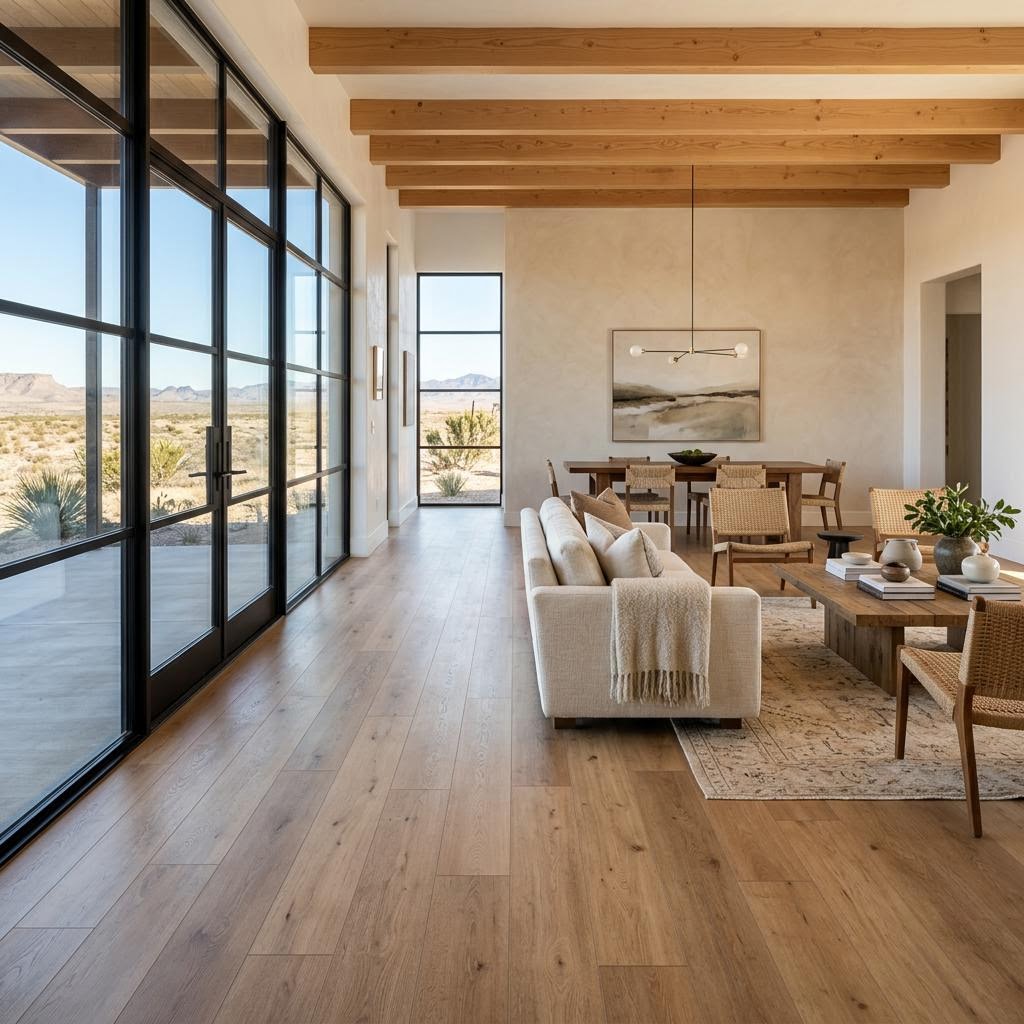
For many, this begins with oak hardwood flooring or wood-look alternatives in main living areas. Oak is a natural fit for traditional spaces, providing visual warmth and versatility with cabinet stains. In rooms where solid hardwood is less practical, a broader flooring design plan can blend hardwood, tile, and carpet to create a cohesive home.
Why oak hardwood still works beautifully in traditional homes
Oak remains a popular choice for its sense of permanence and established feel. When selected carefully, it refreshes a traditional interior without making it feel dated.
We often recommend evaluating oak through three practical considerations:
Color: Mid-tone to warm-toned oak tends to complement traditional millwork, stone fireplaces, and classic cabinetry better than pale or gray-washed finishes.
Texture: Lightly textured or matte finishes feel current without looking rustic or overly casual.
Plank style: Clean, classic plank sizes usually support a timeless look better than extremes that feel too narrow or overly wide.
Continuity is also essential. Using wood flooring to create a visual thread through formal dining rooms, hallways, and living spaces makes a house feel calmer and more unified, preventing the layout from feeling choppy.
Hardwood is not the only option. Some households require the look of wood with added durability for pets or high-traffic areas. Many homeowners choose to compare hardwood and LVP flooring side by side to find a balance between a classic aesthetic and the demands of daily life.
Want To See These Styles In Your Own Home?
Visualize flooring, countertops, and tile in your actual space before you decide. No design experience required.
POWERED BY ROOMVO — COMING SOON
How patterned tile adds tradition without making the home feel busy
Patterned tile is an effective way to preserve a traditional aesthetic in entryways, bathrooms, and kitchens. The key is restraint; the tile should support the architecture rather than compete with it.
The most successful tile selections for Midland and Odessa homes usually share a few traits:
Classic geometry such as subtle checkerboard, diamond, or repeating motifs
Muted color palettes rooted in creams, taupes, charcoals, warm whites, and soft earth tones
Scale that fits the room so the pattern feels elegant instead of overwhelming
Coordination with adjacent flooring so transitions feel thoughtful
In many traditional homes, tile serves best as an accent. A patterned floor in a powder bath or foyer adds personality, while kitchen floors often benefit from quieter designs. The best choice depends on room size, natural light, and existing surfaces.
Seeing materials in person is highly beneficial. A tile that appears subtle in a photo may look much bolder under West Texas light, and patterns that seem timeless in one setting might not harmonize with specific cabinet styles in another.
When implemented correctly, tile anchors the room, adding detail and distinction without making the home feel frozen in time.
Don’t underestimate the role of warm carpet in classic homes
While some assume carpet is dated, the right selection can make a traditional home feel refined and comfortable.
Warm, well-chosen carpet works well in bedrooms, closets, and formal sitting areas where softness is a priority. It provides a visual break, preventing a house from feeling too hard or echo-prone, and aligns well with traditional interiors.
What tends to work best?
Low-profile, tailored textures rather than shaggy or overly casual styles
Warm neutrals that connect to wood and tile tones elsewhere in the home
Subtle pattern or tonal variation to hide wear while adding depth
Quality padding for comfort and longevity
If the goal is a polished, lived-in home, warm carpet for bedrooms and formal spaces helps soften the transition between public and private areas, contributing to a layered, character-rich aesthetic.
Given the dust and busy schedules common in the Permian Basin, today’s carpet options also offer improved stain resistance and durability, allowing for a balance of comfort and function.
Create a whole-home combination that feels timeless
Effective flooring plans emphasize combination and flow. Combining oak in main living areas, patterned tile in accent spaces, and warm carpet in bedrooms creates a space that feels classic and deeply comfortable.
When planning, consider these questions:
Which rooms need the most durability?
Which spaces should feel formal, and which should feel relaxed?
What fixed elements are staying, such as cabinets, stone, or trim color?
How should one room transition visually into the next?
These questions help ensure the flooring design remains cohesive from the front door to the back bedrooms.
Showroom guidance can help prevent costly mistakes. Since a single sample may behave differently against your wall colors or millwork, viewing coordinated options together allows for a more confident decision.
Ready to Love Your Home Again?
If you are ready to update your traditional home with flooring that feels warm and timeless, The Design Gallery can help. Explore options for hardwood, tile, and carpet with our team. Schedule a design session or contact us to get started.
Considering New Flooring?
The right floor sets the tone for your entire home. Our team helps you compare materials, styles, and finishes to find what works best for your space and lifestyle in Odessa or Midland.
Why West Texas Homeowners Trust The Design Gallery
For more than 35 years, homeowners throughout Odessa, Midland, Andrews, Big Spring, Greenwood, Gardendale, Monahans, Seminole, Stanton, and surrounding communities have trusted The Design Gallery by Paul Evans for flooring, countertops, kitchen remodeling, bathroom remodeling, and cabinetry.